
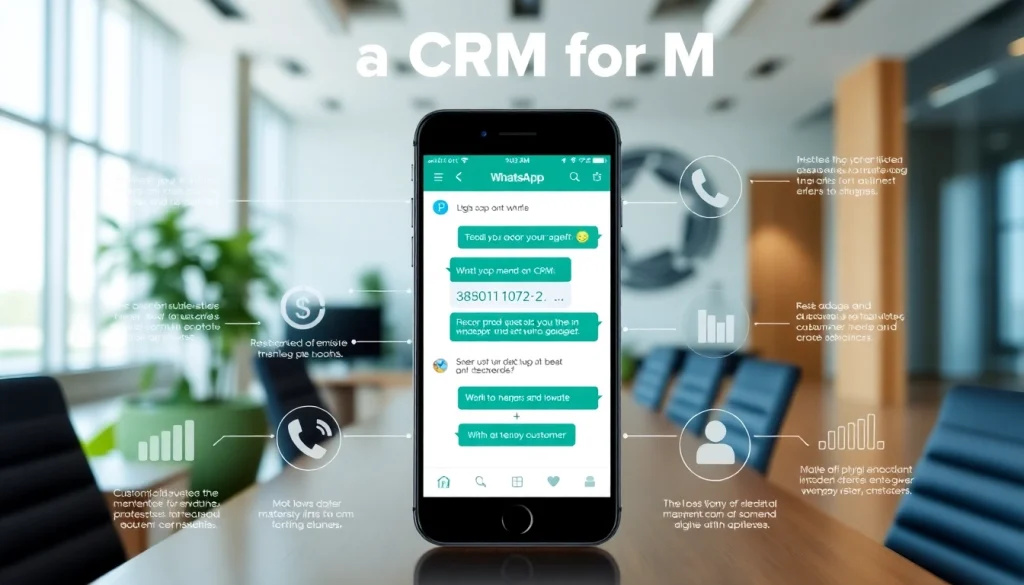
What is a CRM for WhatsApp?
In today’s fast-paced digital environment, businesses are continuously seeking innovative ways to streamline communication and enhance customer experiences. One of the most effective tools for achieving this is a Customer Relationship Management (CRM) system tailored specifically for WhatsApp. A CRM for WhatsApp allows businesses to leverage the widespread use of the messaging platform to manage customer interactions and relationships seamlessly. Understanding What is a CRM for WhatsApp is crucial for businesses aiming to boost their customer service and engagement strategies.
Definition and Purpose
A CRM for WhatsApp is a specialized software solution that integrates with the WhatsApp Business API, allowing businesses to manage their interactions with customers through a centralized platform. This integration serves multiple purposes:
- Enhancing Communication: Businesses can communicate with customers in real-time through WhatsApp, a platform familiar to millions.
- Centralized Data Management: It stores customer information, interactions, and history in one place, making it easier for teams to access and use this data.
- Automated Workflows: Many CRMs incorporate automation features that streamline customer service processes and reduce response times.
Core Components of WhatsApp CRM
The core components of a WhatsApp CRM typically include:
- Integration with WhatsApp Business API: Essential for enabling messaging capabilities directly through the CRM.
- Customer Database: A repository that collects customer profiles, interaction history, and preferences.
- Chat Management Tools: Features that allow customer service representatives to manage and respond to chats efficiently.
- Analytics and Reporting: Tools that monitor engagement metrics and customer satisfaction levels.
- Automation Features: Tools for automating responses, follow-up messages, and data entry tasks.
How It Works
The functionality of a CRM for WhatsApp hinges on its integration capability. Initially, businesses connect their WhatsApp Business account to the CRM platform. Once connected, they can:
- Engage with customers through instant messaging.
- Utilize chatbots to answer frequently asked questions automatically.
- Track customer inquiries and feedback to improve services or products.
- Analyze conversation data to identify trends and customer behavior.
Benefits of Using a CRM for WhatsApp
Enhanced Customer Communication
With the rise of instant messaging as a preferred communication method, a CRM for WhatsApp allows businesses to be accessible to customers whenever and wherever they are. This leads to improved customer engagement and satisfaction, as queries can be addressed in real-time.
Streamlined Business Processes
Integrating WhatsApp with a CRM system contributes to more efficient business processes. By automating routine tasks—such as sending welcome messages or appointment reminders—businesses can free up valuable time for team members to focus on more complex customer challenges and enhance service delivery.
Effective Data Management
This type of CRM system not only collects customer data but also organizes it in a way that is easily accessible for analysis. Businesses can leverage insights from WhatsApp conversations, enabling them to tailor their services more effectively and make data-driven decisions regarding marketing strategies.
Key Features to Look for in WhatsApp CRM Solutions
Integration Capabilities
A seamless integration with the WhatsApp Business API is crucial for any CRM designed for this messaging platform. It’s essential to look for CRM systems that also offer integration with other tools and platforms—like email marketing software and e-commerce platforms—to create a cohesive operational environment.
User-Friendly Interface
The usability of the CRM is paramount. Teams should be able to navigate the software easily, ensuring that onboarding and day-to-day operations do not involve steep learning curves. A clean, intuitive design enhances productivity and ensures that all team members can utilize the tools effectively.
Analytics and Reporting Tools
Robust analytics features allow businesses to analyze customer interactions and engagement metrics thoroughly. Reporting tools that provide insights into conversation volumes, response times, customer satisfaction levels, and more can guide strategic decisions and highlight areas needing improvement.
Challenges in Implementing a CRM for WhatsApp
Technical Integration Issues
One of the primary challenges businesses face when implementing a WhatsApp CRM is ensuring proper technical integration between their existing systems and the CRM. Detailed planning and testing are required to properly connect these systems, and failure to do so can lead to functionality issues.
User Adoption Barriers
Another common challenge is user adoption. If staff members find the new system complex or cumbersome, they may resist using it. Training sessions and ongoing support can help overcome resistance and boost user confidence and proficiency with the new CRM tool.
Data Privacy Concerns
Data privacy is a significant concern in today’s digital landscape. Businesses must ensure that they comply with regulations, such as GDPR, when using CRM systems. Implementing strong data protection measures and being transparent with customers about how their information will be used can build trust.
Future Trends of CRM for WhatsApp
AI and Automation Features
The future of WhatsApp CRMs will heavily feature AI and automation. Advanced chatbots powered by artificial intelligence will be capable of handling more complex queries, learning from interactions to enhance their responses over time. This level of automation will free up customer service representatives to focus on high-priority tasks.
Increased Personalization Strategies
Data-driven personalization strategies will become increasingly important. CRMs will enable businesses to understand customer preferences and behaviors better, allowing for tailored marketing campaigns and customized interactions that foster loyalty and retention.
Integration with Other Platforms
The trend towards integration with other platforms will continue to grow. By connecting a WhatsApp CRM with various management systems, businesses can create a unified customer experience that aligns messaging, sales, support, and marketing efforts into a cohesive strategy.